
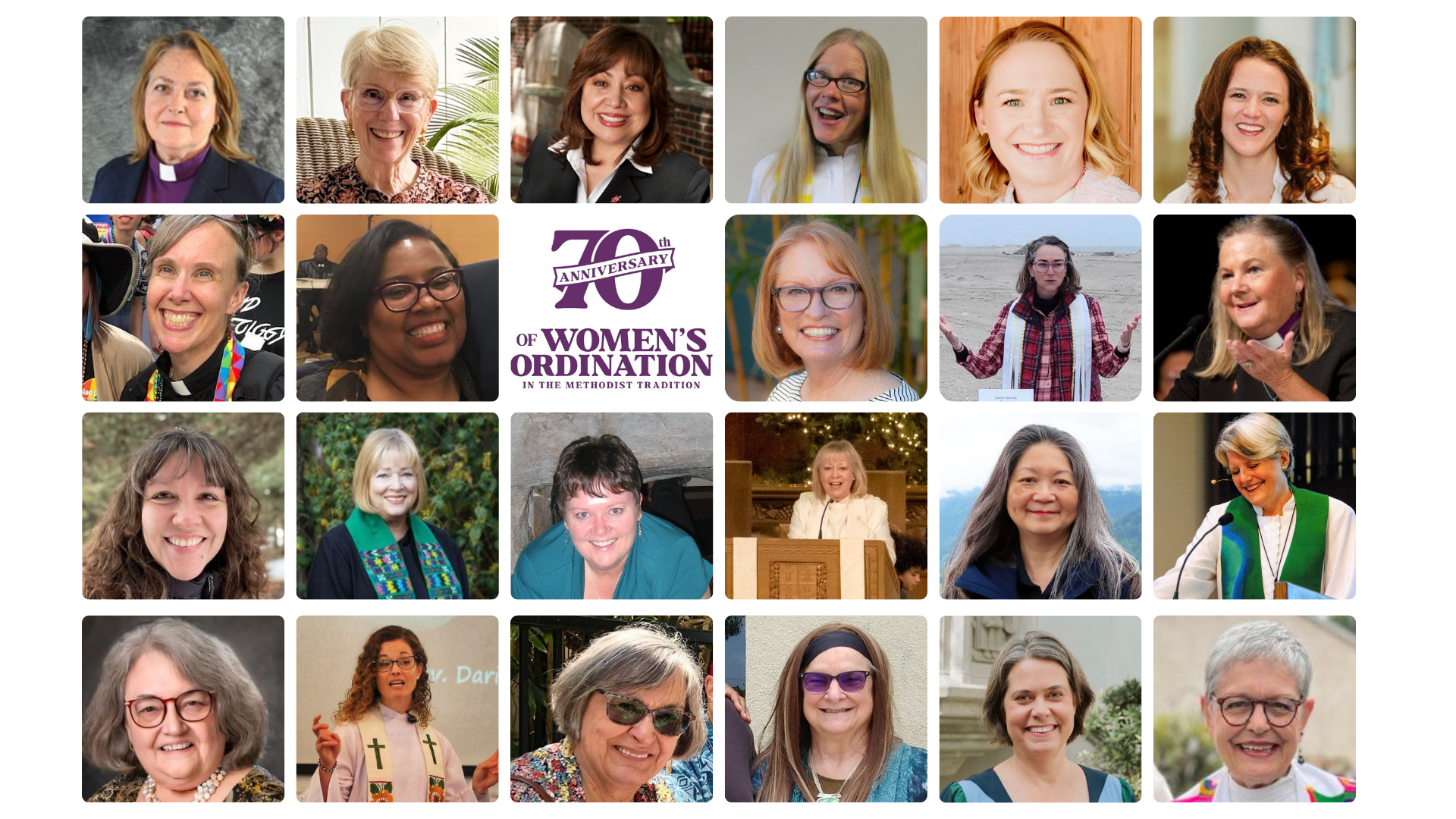
This month, the United Methodist Church is celebrating the 70th Anniversary of Women’s Ordination. We reached out to the clergywomen we know of who have a direct connection to our congregation. These diverse women have served as our pastors, as our Bishop, and as our District Superintendent. They are candidates for ministry who came from our congregation, or spent time here. They are clergy women who hold their membership with us as they serve outside of the local church, or in retirement.
Seven of these women share reflections here: Bishop Minerva Carcaño, Karen Clark Ristine, Michele Johns, Patricia Farris, Holly Reinhart-Marean, Debby Camphouse Sperry, and Diana Holbert.
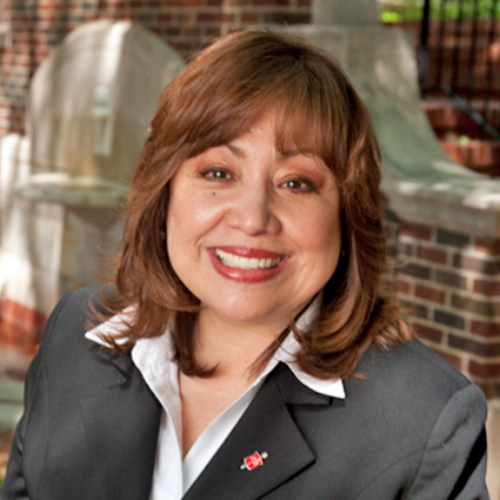
Bishop Minerva Carcaño is now retired. She served as our Bishop in the California-Pacific Annual Conference from 2012-2016.
When I was 5 years old, I had the most incredible spiritual experience! Sitting on the floor of my kindergarten classroom all alone I felt God embrace me with tender love and fill my heart with joy. From that day on I sought to find a way to live my life in God’s house. Three years before, what is today The United Methodist Church, had come to the conclusion that women called to ordained ministry should be welcomed. I am so grateful to God for the women and men who were wise and brave enough to follow the leading of the Holy Spirit. We are all called to serve God in different ways including in ordained ministry.
My journey to ordination was not always easy, but looking back on my experiences causes me to smile. I remember when a pastor who became my role model for pastoral ministry, turned to me as some of the boys in our church’s youth group and I were talking and unexpectedly said to me, “Minnie, you would make a great pastor’s wife,” and then turning to the boys with a look that communicated that he was waiting to see who among them would say they were called to be pastors. The boys looked away and those standing closest to me moved away from me. I remember wondering whether the thought of me as a wife was what had caused the boys’ reaction or responding to a call to ministry was!
My grandmother Sofía taught me to read as I prepared to enter the first grade. She only spoke and read in Spanish, but she believed that if I could read in Spanish, I would have a good base for learning English. She taught me the Spanish alphabet and thenone evening she handed me her Spanish language Bible opened to a passage she had chosen. Inviting me to pray with her she taught me that we needed the help of the Holy Spirit to read the Bible with understanding. Patiently she would help me read a passage from the Bible every night before we went to bed. I grew to especially love the Psalms and the parables of Jesus. After reading the scripture passage, she had chosen, Grandmother Sofía would ask me three basic questions: What did the Bible passage say? What did it mean to me? What were we going to do because of what the Bible had taught us?
When as a college student I declared my call to ordained ministry several clergymen told me that I could not possibly join the ranks of the clergy because according to them, women were not given the gift of understanding and interpreting the Bible. I could have been deterred from my call, but I had the memory of my Grandmother Sofía to lean on, a woman who studied the Bible diligently, trusted the guidance of the Holy Spirit to understand it, and loved God’s Word dearly.
Ordained a Deacon in 1976 and an Elder in 1980, I have been deeply blessed. To this day I still feel the presence and the love of God and the joy that I felt when I was 5 years old.
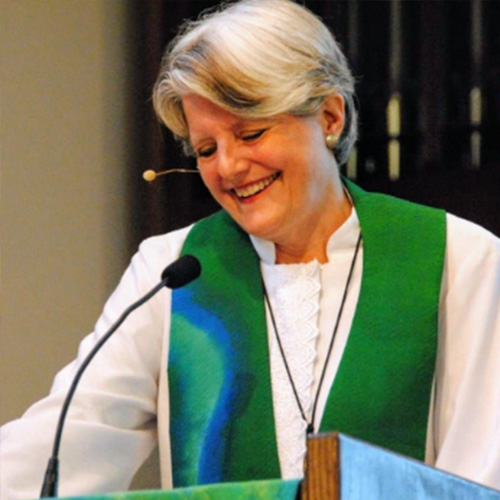
As a retired ordained Elder, Karen Clark Ristine holds her Charge Conference membership at Westwood.
I’m Rev. Karen Clark Ristine. I spent almost 20 years in ministry and more than 20 years in journalism, and I found them to be very compatible vocations. I’m queer clergy, and I came out to myself and then gradually to congregations in the course of my ministry, and I never experienced any concerns around that.
But what surprised me is when I moved from the business world in, like, 2005, when I moved from the business world into the church world, I was really surprised that the church world seemed really far behind to me.
It seemed like the attitudes toward women, the attitudes toward what women could do respect, just basic respect, was missing in the church world in ways that it was present in the business world. And I have found that to be relatively consistent, which is a sadness I hold. And yet, within our connection, there are so many wonderful clergy women, clergy men clergy, non-binary, trans clergy.
We have so many beautiful expressions of who we are. And we need to work on our basic human frailties of othering others Yeah, thank you So it was yeah. So it was a challenge, but it was just a surprise.
I think my biggest joy has been the way that clergy women and lay women support clergy women. Like clergy women support one another, mentor one another, look down the road to see who else needs to be connected with a mentor or mentored. And I treasure the fact that my first mentor was Rev. Sue Farley. My second mentor was Rev, Molly Vetter. My seminary mentor was Rev. Michele Johns. And my seminary field education mentor was Rev. Sharon Rhodes-Wickett. I have a Mount Rushmore of wonderful mentors. And I see that the word that’s come to mind is contagion–and that sounds like a negative word, but I just see that when you’ve benefited from the generosity and the welcome and the connections with other clergy women, you want to do that for other clergy women too.
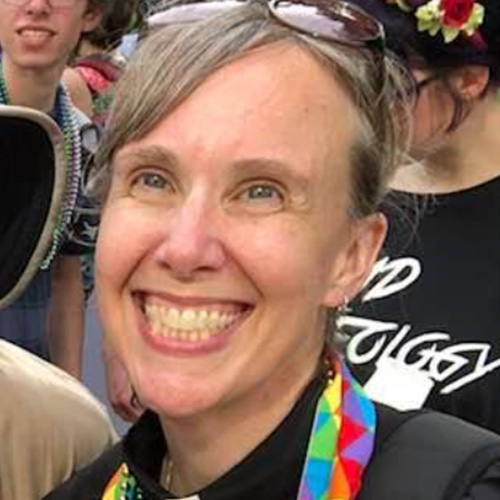
Ordained as a Deacon and serving in Washington, DC, Michele Johns holds Charge Conference membership at Westwood UMC.
My name is Rev. Michele Johns. I am a member of Cal-Pac, serving in the Baltimore-Washington Annual Conference at The DC LGBTQ+ Community Center. I am the lead therapist and advocate, working with folks who have been victims of crime, violence, or experienced other trauma.
In terms of challenges – it’s been a mixed bag. I grew up in the Alabama-West Florida Annual Conference, as the child of two clergy people. Methodism runs deep in my family on both sides and I am seventh generation clergy on my mom’s side. Growing up I witnessed discrimination against my mother that impacted the entire family because of various people’s understandings of who should serve and who shouldn’t. My own journey has been a combination of moving into my call as someone who has long known I was queer, and who witnessed other people who are queer being either closeted or harmed by our denomination. In some ways I followed in my parents’ footsteps and in so many other ways, my journey has been very different and unique. I’ve always had a deep call to the work of justice and the connections outside of the church, but also very much to the work inside the church and to sacramental ministry as well.
While there have been challenges, there have also been so many wonderful ways in which women in ministry have shaped me and my vocation. Part of that is connected to this congregation and the ways in which you all have played a role in my journey. I participated in a trip to El Salvador with you all many years ago with Bishop Swenson and Rev. Sharon Rhodes-Wickett and that was a transformative moment for me and in my call and in my journey of moving into that call.
In talking about the challenges, the joys are there, too. I feel like it is intertwined in a dance. And in some ways, the challenges are the joys—including how I am ordained and queer and out and have been for a very long time, even when our denomination didn’t embrace that or support it.
So there are ways in which those joys are profound, and the ways in which we are also more and more recognizing the multiplicities and differences of who we are who we are in terms of gender and gender identity, and the ways in which God has been calling us to serve folk of all genders to serve for a very long time.
This moment is particularly exciting as we celebrate the 70th anniversary of Women’s Ordination and also the ways in which this is a marker of a variety of folk who have been kept out or held back. I think any time we acknowledge the impact of harm on one group it is also important to acknowledge the ways in which other groups have been held back as well.
So again the joys and challenges kind of weave together. But this is a time of celebration, and so I am absolutely celebrating this time. There were times when I have been serving in a local congregation with only clergy women and a child meets a male-identified pastor and says, “Oh, boys can be or men can be pastors, too?” And it’s this beautiful world of: “Yes, all genders can be pastors!” It’s a really beautiful landscape to be a part of these days.
Another space of great joy is in Pride parades – there is so much joy in those spaces! In DC, it’s usually in the sticky hot, humid middle of June, and so you’re sweating. I feel profound joy wearing my clergy collar with beads or other rainbows on me, looking into the faces of those watching the parade, or participating in it – sometimes in shock, grief, joy, or a mixture of all of these things, and the palpable presence of God’s love and abundance that – no more gatekeeping, no more some people are in and some people aren’t. A sense that there is an abundance of love for each of us. The Pride Parade is often this time of great celebration and people receiving the sacrament of welcome–of connection and welcome. Those moments truly transform and bring people into greater connection with self. And I think when we can be in greater connection with self and our own authentic-ness, there’s also a connection to spirit and divine and to the holy.
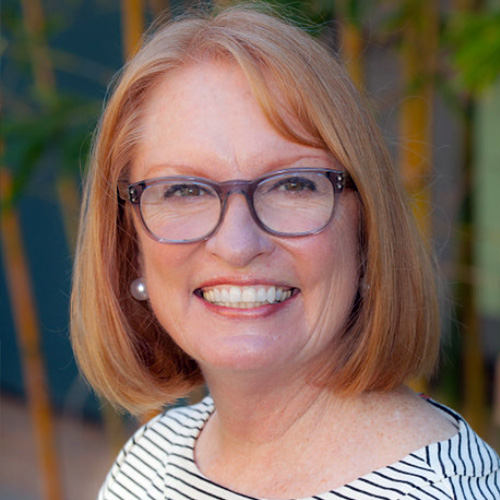
As a retired ordained Elder, Patricia Farris holds her Charge Conference membership at Westwood. She also serves as the President of the Board of Trustees for the Claremont School of Theology.
“See, I am doing a new thing!” -Isaiah 43:19
When I set off for seminary in 1974, I had not seen, let alone met, a clergywoman. I had heard of one, and she later became a trusted friend and mentor. I had grown up and been very active in my home United Methodist church. But in those days, there were no girl acolytes, no women Trustees or ushers, and the only time a woman stood and spoke in the pulpit was on United Methodist Women Day when a lay woman was offered the opportunity to give the Sermon.
During my third year of seminary, I did my internship with Commission on the Status and Role of Women of the Southern New England Conference. I visited a different congregation almost every week, invited by those faithful UMW lay women to come and speak about “Being A Woman in Ministry.” We examined Scripture, church history, societal trends, family roles, and clergy/lay dynamics. All questions were welcome. I think my favorite, along with “Can you get married?” was “Can you wear earrings in the pulpit?”
Mostly, now, I think it was about seeing and being seen. It was about incarnation and embodying hope and possibility. It was about ALL things becoming new through the great love and audacity of our Creator God.
Thanks be to God for all who came before, for all who embody that new reality now, and for all yet to come. Whoever you are, however God has created you—you are a beloved Child of God and the embodiment of the gift of new possibilities for the church and for the whole of the World.
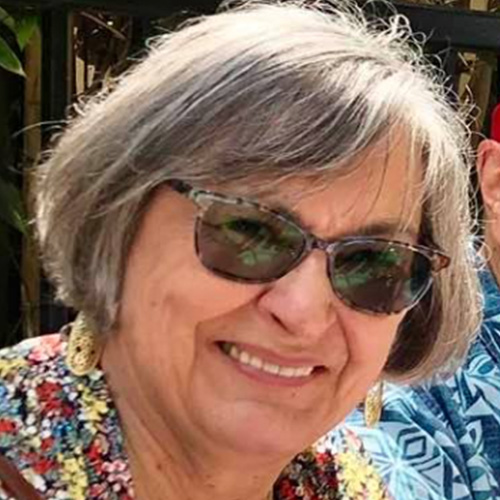
Holly Reinhart-Marean got involved at Westwood UMC when she was 10, and remained involved and connected to the church through high school, college, and seminary. She was a candidate for ordination from our congregation. An ordained Elder, she is now retired, and lives in Texas.
I really don’t think that the joys and challenges I have experienced as a clergywoman are much different than those of other clergywomen. The joys of leading people deeper into faith through worship, sacraments, pastoral care, teaching, and loving them are certainly joys that we share in together, and not really different than our clergy brothers also experience.
Most of the challenges resulted from the small number of clergywomen who were in the conference in my early years. My first appointment put me in a district where I was the only appointed female pastor. Collegiality was difficult, but I found my way.
One story that I can share is when I was sent to a very troubled congregation. Before I started that appointment, but after my introduction, a group of church leaders held a sit-in at the district office to protest that I would be receiving the same salary as my male predecessor. I was informed of this by my District Superintendent who also informed me that at the previous Church Conference he had been afraid that there would be a physical fight between the long-time leadership group and the new younger families who were beginning to take some leadership.
The younger families had left the church, and I was expected to lead them forward, after a conflict management team had been unsuccessful in resolving the issues. I entered the church with fear and trepidation but was greeted following the service with people who were pleasantly surprised (they said) that they could understand the sermon. As I proceeded to work with the people, listening to them, walking through their lives with them, finding ways for building community both within and outside of the church, and gently and firmly (as my spouse puts it) “pulling the dragon’s teeth,” we found a faithful way forward together in love.
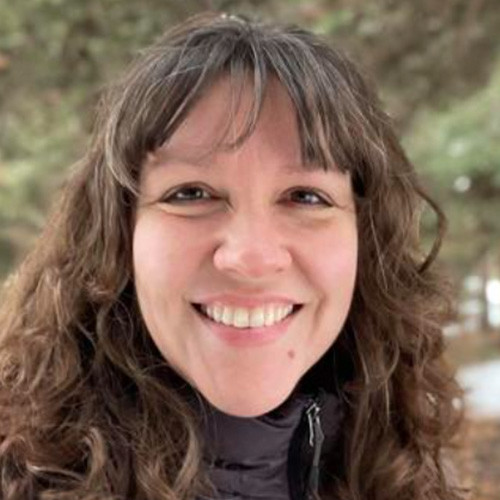
My name is Reverend Debbie Sperry, and I grew up in First United Methodist Church in Bishop. And then when I went to college at UCLA, I made my way to Westwood, and I enjoyed worshiping there under Reverend Sharon Rhodes-Wicket. I served in the youth ministry with Michael McNeill, too. I worked with Frank Wulf in exploring my call.
I serve now in Wenatchee, WA, which is on the east side of the Cascades in the center of the state. We are proudly the apple capital of the world. And it happens to be that Wenatchee is where Reverend Michael McNeill moved after he served at Westwood. So he and I have reconnected in our ministry journeys.
It also happens to be that Wenatchee First is the church that Mary Ann Swenson was serving when she was elected bishop in the denomination. So lots of fun connections between Westwood and Wenatchee within my ministry context and story. Pastor Molly invited me to share as part of your celebration at the seventieth anniversary of women’s ordination, and one question that she posed was, “What is one of the challenges that you have faced as a woman in ministry?”
I find myself very blessed in so many ways because I did get mentored by Reverend Sharon and Reverend Jane Voigts, as well as Holly Reinhart-Marean and Bishop Swenson. So I had lots of powerful, smart, educated, very capable women leaders and pastors as my mentors and leaders and examples, and I find great pride in who I am and how I am called to ministry.
So in many ways, I don’t face all of the same difficulties that other women have in other generations. They’ve forged that road for me. And still, these seventy years later from women’s ordination in the UMC, there are still plenty of denominations that do not affirm women in ministry and do not ordain women.
I noticed just a few weeks back when I was on my way to a prayer breakfast, as I made my way through the parking lot, I wondered, “Will I be the only female pastor here?” That’s still a regular occurrence. And I walked in, and the host at one of our Christian schools immediately knew me and greeted me, “Oh, you must be Pastor Debbie,” and I thought, “Oh, I’m definitely the only woman here because how else would he know who I am when I’ve never met him before?”
I was wrong. He didn’t know me, so he’s been watching me on YouTube, so that’s how he knew exactly who I was. And I was not the only woman. Of the forty pastors gathered, there was one other. You know, being in the minority still in those ecumenical spaces can be challenging. Knowing that some of our colleagues don’t wanna listen to us at all as having scriptural authority or theological education or voice within the church is really difficult and frustrating and hard, and I try not to take it personally.
That’s their stuff to work out, not mine, so I don’t take that on too often. I also wanted to take the opportunity to share a blessing that I find in my womanhood as a female pastor. When I read through the scriptures, I certainly find resonance and depth in the stories of the women that we find there, and one particular example came with Mary, mother of Jesus.
I was in my fifth month with my first pregnancy when it was Advent and Christmas. And so as I imagined Mary and the angel, I could see, so to speak, I could feel her experience differently that year. I had endured my morning sickness, and so I didn’t just hear the voice of the angel to Mary or imagine her in Bethlehem giving birth, I imagined her having morning sickness over the back gate.
Not the most pleasant of concepts, but something that just helps us understand the humanity and the depth of the individuals that we find in scripture. I also have found a deeper connection with God in my role as woman, and particularly as mother, in the ability to co-create with God and bring life into the world, to nurture my kids, and to stand or sit in awe and wonder at God’s majesty as I stare at my kids’ fingernails or their eyebrows or eyelashes or their ears.
The intricacy of creation, I think, is particularly profound as we watch humans grow, and we find great joy in children, or at least I do. And so I find that connection to God, our creator, the God who births life into creation, into the world, and indeed to each of us. So thank you for letting me share with you on this special anniversary of women’s ordination.
And thank you for supporting me as I was a college student and exploring my role and work and call in ministry. I am grateful for those who were such a powerful and profound part of my story. God bless you.
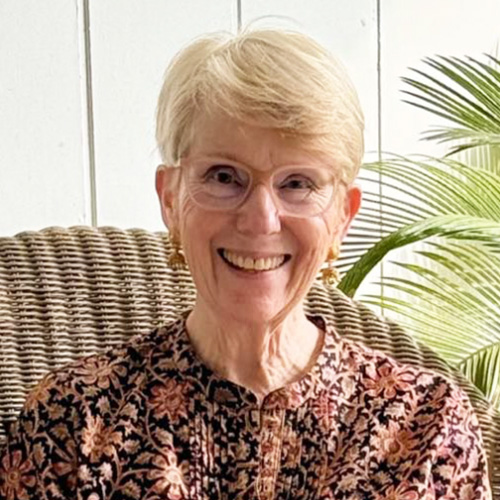
Diana Holbert serves as our Minister of Care at Westwood. She retired from fulltime ministry after 20 years of service in the UMC in Texas.
When I was 9 years old I met my first clergy woman in the Methodist Church, and she had on these big old clunky shoes, called Dickersons. She just marched through the church and I thought, “Well, I’m never gonna be a clergy woman ’cause I do not wanna look like that.”
I promised my life to God when I was 12 in vacation Bible school, but I thought the only thing a woman could do was be a missionary, so I spent my whole junior high and high school trying to figure out how on earth I was going to be a missionary to Africa. Then I got to college, and I fell in love–and the guy didn’t wanna be a Methodist minister, so I told him I couldn’t marry him.
He said, “Okay, I’ll become a Methodist minister if you’ll marry me.” And so we did that. I went into music because you could talk about God without talking about God, just the beauty and holiness.
Then I found that my primary religious language was actually dance. I started a liturgical dance group and danced all over the world doing that for the first 20 years of my adulthood. One Sunday, one of my dancers said to me, “I think you need to go to seminary because you like to talk about God even more than you like to dance.” So I went to seminary.
After serving in the British Methodist Church, I was appointed to a church in a Dallas suburb. After I’d been there a month, a women named Connie came through the receiving line afterwards. She said, “Diana, I wanna thank you.” She was very serious, you know. No tears, no high emotions, just, “I wanna thank you that I finally understand that I can be made in the image of God because of your preaching as a female.” So powerful.
My first United States appointment, one of the little boys came up to me. It still makes me wanna cry. He said, “I really like you, Pastor Diana, but my daddy doesn’t like girl preachers, so we’re not coming to church anymore.”
Then I danced a sermon and as I was coming down the aisle with my dancing vestments, my lay leader heard a male say behind him, “What is this? The sacrifice of the vestal virgin?” When he told me, I was crushed, because dancing was–is–the epitome of my religious language, the way I am able to express my love for God. It’s when I can get out of the way completely. So that was very crushing. That same morning then, after I heard this, under the door came a slip of paper. On it was drawn this angel figure, dressed like I had been in my dance. It was from Jessica, nine years old, who wrote: “My pastor.”
When I left that church, I was in the meeting when the District Superintendent came to talk about the new person coming, and who they needed, who they wanted, who they thought they were. They all said, “Well, if we have to have a male, we’ll accept him. But we really want a female.”
I’m so thankful to that woman in her Dickerson tie-up shoes that clomped through the hallways, because I’ve learned how to do that too, and it doesn’t matter what I look like. It just matters that I’m there, spreading the word.